Anna university 2marks(click me)
Anna university Maths(click me)
Wednesday, June 16, 2010

Monday, June 14, 2010

Thursday, June 10, 2010
phd admission 2010 in tamilnadu
All India Admissions 2010
- Tamilnadu B.VSc./ B.Tech Admissions; Last dt: 07/06/2010
- NITTTRC M.Tech./ Ph.D. Admissions Last dt: 25/06/2010
- Gandhigram Rural Uty Admissions 16/06/2010
- Tamilnadu Engineering Admissions Anna Uty. Last dt: 31/05/2010
- CUCET 2010 Last dt: 27/05/2010
- NIT Warangal M.Sc. Ph.D admissions Last dt: 24/05/2010
- MGR Uty UG/PG/Ph.D. Admissions 16/05/2010
- Tamilnadu ME/M.Tech/MBA/MCA Cet. Last dt: 17/05/2010
- NIMHANS B.Sc. Admissions last dt: 25/05/2010
- VIT MS Software Engineering Last dt: 24/05/2010
- DM/MCh Super Speciality Courses in Maharastra Exam date 26/06/2010
- Central University of Karnataka Gulbarga Admissions. Last dt: 30/05/2010
- Bharatidasan University UG, PG, Research, MBA Admissions. Last dt: 31/05/2010
- BITS Mesra MBA Admissions. Last dt: 05/05/2010
- Film and Television Institute of India Pune Admissions Last dt: 15/06/2010
- VIT University M.Tech/MS/Ph.D. Admissions Last dt: 25/05/2010
- Reliance Institute of Life Sciences Admissions. Last Dt: 15/05/2010
- CIFNET- 2010. Fisheries Science & Nautical Science Admissions. Last Date: 22/05/2010
- Alagappa University, Tamilnadu- MBA Admissions
- Dhirubhai Ambani Institute (DA-IICT) B.Tech., M.Tech. Admissions 2010. Last dt: 05/05/2010
- Sikkim Manipal University Distance Education Admissions 2010
- University of Hyderabad Admissions 2010
- BITS Pilani - Wipro MS Degree in IT (WASE Program)
- NIPER JEE 2010 for M.S., M.Tech., MBA (Pharma). Last Dt. 21/06/2010
- BITSAT 2010. Last Dt. 10/05/2010

Tuesday, June 8, 2010
parvathamalai swamigal
Parvathamalai
Parvathamalai video (click me) | | |
 |  |


Parvathamalai is located at Thenmahadevamangalam village which is about 20 kms off Polur. Polur is some 35 kms north of Thiru Annamalai (Arunachala). There's a very powerful Lord Shiva temple at the top of the Parvathamalai hill. Devas and spiritual beings from other lokas worship here every night. This is a place visited by numerous Siddhas for Shiva worship. Reaching the hill is somewhat difficult. Hence it is better to start early in the morning and return as early as possible. During the Pournami full moon, this hill attracts a lot of devotees. This is a place vested with a lot of spiritual power.
"The Siddhas have spoken volumes about Pancha Nathana Nataraja. They say that this deity is such a rarity in the Universe that even the Devas would give anything just for the chance of worshipping him. They say that on the Nataraja Abisheka days which occur in certain Tamil months (Chitra, Aani, Aavani, Purattaasi, Margazhi and Maasi), the Devas perform their worship to this deity in subtle form. This kind of worship is similar to the sookshma worship done by the Devas at the peak of the Arunachala Hill and on the Parvathamalai Hill."
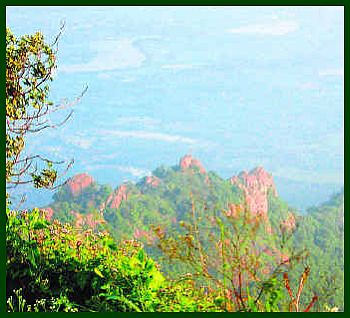
Parvathamalai is part of the Javadhi hills and located 25 km north of Tiruvannamalai. You can get there by taking a car or bus from Tiruvannamalai to Kadaladi, from where you can undertake the trek. Alternatively you can go Thenmadhimangalam village (which is about 20 kms from Polur), which provides another route to the top. Although less bumpy the Thenmadhimangalam route is longer.
Works relating to a Rs.8,000,000/- (U.S.$181,200) tourism infrastructure development for Parvathamalai hill in Tiruvannamalai District has now been completed.
This upgrade includes: providing Black topping to Parvathamali Road, construction of a waiting shed at Pachiamman Temple, Parvathamalai, formation of foot-path with hand rails from Pachaiamman Temple to Veerapathiran Temple, construction of restroom complex for men and women, formation of foot-path with hand rails from Veerapathiran Temple to Parvathamalai Hill, providing steps at Parvathamalai Temple pathway, providing water supply to the top of the Hill Mandapam and providing electric poles with lights on pathway.
It is becoming increasingly popular for pilgrims and tourists to trek up the Parvathamalai Hill on a full moon day/night.
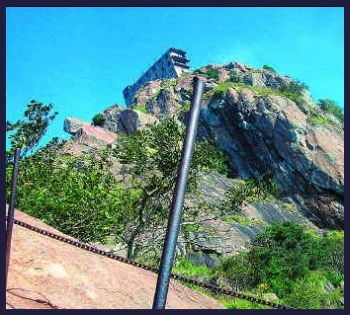
The arduous walk can take up to a total of 10 hours, starting through the hill forest and finishing up with a final sharp ascent of about 3,000 feet to reach the Hill top.
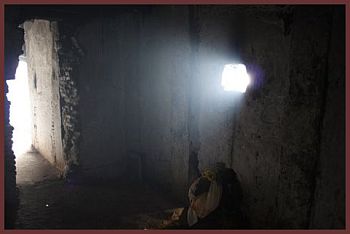
As well as some other structures, there is also a very powerful Shiva temple at the top of Parvathamalai Hill, and it is believed that Devas, Siddhas and spiritual beings from other worlds worship on the top of the Hill every night. The above is a photograph of the entrance to the Temple.
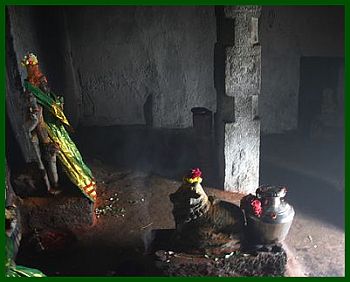
Nandi facing the Lingam at doorway of inner shrine.
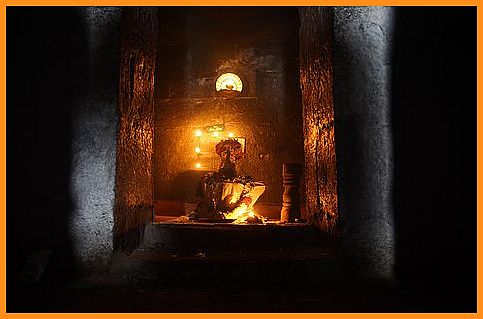
Shiva Lingam at Parvathamalai Temple on top of the Parvathamalai Hill.


(Biravan,taking rest)

(Long way to go)


(Have to reach that Top)


(Risky and Thrilling)


(Ah,Finally)

thiruvannamalai siddhargal

Siddhas of South India: Sadhu Chidambara Swamigal:
Recently I visited the Jeeva Samadhi temple of Sadhu Chidambaram Swami, who is also known as "Valla Naattaar". A Jeeva Samadhi is when a saint or siddha is burried in samadhi while still living. Such locations are spiritually very powerful, as the saint continues to interact with devotees through his samadhi. I would like to narrate a few stories of this little known saint of South India, who entered Jeeva Samadhi in recent times.
The samadhi of Sadhu Chidambaram Swami is situated within the region of his ancestral house. This is in a village called Paarai Kaadu (rock forest) that comes under the township of Valla Naadu. Valla Naattaar means a respectable person from Valla Naadu.
Two of the great gopurams in the third enclosure of Tiruvannamalai temple were built by kings of the Valla Nadu dynasty. Valla Nadu used to be the capital of a great kingdom during the late 17th century. It is still believed that there are forts and palaces buried under present Valla Nadu. The township comes under Tuticorin district but it is closer to Tirunelveli city, just 28 kms on the way to Tuticorin.
Not having facility to go for education, Chidambaram was entrusted with the village herd of sheep. His father was a simple village doctor who could cure diseases with herbs and leaves collected from nearby forests. His parents were very saintly and the village people respected Chidambaram’s father as a sadhu.
As a child, people have seen unearthly cobras around Chidambaram as he slept under trees, while the herd was grazing. When his friends came back from school they always gathered around Chidambaram who would give them sheep’s milk in coconut shells and would talk to them about godly principles of life, using a level of language the children could understand. There were times when he fed the cobra and gave remnants to his friends, who became scared and wouldn't accept them. Chidambaram would smilingly drink the milk and would tell them, "By taking these remnants, you will become free from danger of any poison."
As he reached teenage, Chidambaram left the village on a long pilgrimage to different holy places. He wore kaupinam and a white cloth which came down to his knees, sometimes he was clean shaven, both head and face and other times with long hair and beards.
He took Vallalar, Ramalinga Adigalar, the author of Tiruvarutpa ("song of holy blessing"), as his Guru, even though they were not contemporaries. He used to chant Vinayakar Agaval (a composition of the lady Tamil poet Avvayar), and a small prayer composed by Chakizhaar known as ‘Siva Puranam’, which is the shortest summary of the Tamil Siva Puranam done by the same author, and different verses of Tiruvarutpa. Seeing the effulgent pilgrim, people gathered around him in different temples. If anyone would fall at his feet, he would also fall at their feet. Embarrassed, people would just fold their hands and respect him. The sadhu responded the same way. Apart from conversing with loving and affectionate words, he never gave any sermons.
On his sojourn he came to a village near Udumalaipet in Palani district. Seeing a high hill in the area, he was mysteriously attracted and wanted to build steps to the top and arrange there a monthly Jyothi as done in Tiruvannamalai. The invocation in Tiruvarutpa, which is always chanted like a mantra
a sound, syllable, word, or group of words that manifest spiritual power when chanted'); return false">mantra by the followers of Vallalaar, is:
arut perum jyothi, arut perum jyothi thanipperum karunai arut perum jyothi
This couplet means, "Supreme grace light, supreme grace light, shower your compassion on us, supreme grace light."
He approached a farmer Naachiappa Gounder and asked his help for building the steps. Gounder was sceptical about the sadhu. Chidambaram allured him by saying that he would cure the skin disease which Gounder had been suffering from for a long time, even after trying English and native medicines.
A committee was formed and construction began. Sadhu worked hand in hand with the laborers and accepted frugal food. The construction was finished within a very short time. The day before amavasya, as guided by the sadhu, they filled up a huge barrel wok with 50lt of oil(a mixture of gingely, coconut, mustard, castor oils, and ghee). Ten long dhothis were tied together to make a long wick, which was then lit on fire.
Seeing the jyothi in the dark night, lots of people from nearby villages assembled. Prasadam was cooked to feed everyone who came. The sadhu requested that this ceremony be done every month. Next morning, seeing that all this time the sadhu never did anything for curing his ailment, Gounder used very harsh words, calling the sadhu a cheat. While climbing down the hill, smilingly Chidambaram took out from above his right ear some Durba grass and told Gounder to boil it over night in 3 liters of water till it reduced to 2 cups. Even though the grass mystically appeared on his ear, he also pulled out a plant from a nearby bush, and told that the root of that plant should be boiled together in that water. Gounder was supposed to drink the water in the morning and to make a paste from the root to apply on his palms.
Having done his service for the people of the area Chidambaram went on his way that afternoon. On the third day, not only did Gounder’s ailment disappear totally, but also the root disappeared. This and a few more experiences were narrated to me in person by Gounder who is now 92 years old, but hale and healthy.
After establishing a similar jyothi service on 6 main mountains, and six subsidiary hills, Chidambaram returned home. On the insistence of his parents he married. Before the marriage he requested the girl to be a vanaprastha and she agreed.
One day a single tusked elephant showed up in front of the house and sadhu kept him as a friend for over 11 years. The head of the dead elephant is kept in the meditation room cured with some technique suggested by Sadhu Chidambaram.
Another time a large baby elephant came from the forest and was kept as pet by sadhu. He grew up into a huge elephant, attracting all the pilgrims who came to feed him. After the Jeeva Samadhi of Sadhu, the elephant fasted till death, and was buried close to the Samadhi.
The Samadhi day of Swami Chidambaram is celebrated on the full moon day of the Tamil month Maasi, (around the end of February). Almost 100,000 devotees gather each year. Everyone is fed sumptuously for three days.
At all of the Jyothi hills established by Swami, 500 to 1000 people are fed on the Deepam day (once a month). In the Samadhi temple every day the senior men and women of the village are fed along with all the guests who visit (around fifty each day).
The repeated words to devotees by sadhu are : "Do the paaraayana of Vinayagar Agaval, Sivapurana and Arut Perum Jothi. Do annadaanam. Light the jyothi on these hills and also at your home. Live a simple and pure life".
Another experience was narrated to me by Mr. Goundar, which I would like to share. One time he was traveling along with Swami Chidambaram in a jeep to attend a religious program. On the way the jeep ran out of petrol and stopped. The driver didnt know what to do, as they were some distance from a city. Sadhu Chidambaram asked the driver if he had a bottle of water. The driver replied that they had a two liter bottle of water.
Swami told him to pour the water into the petrol tank, and then drive till they came to a petrol bunk. At the petrol bunk he should pay the owner for two liters of petrol. The driver did as Swami told and poured the water into the petrol tank. Amazingly, the jeep started and they were able to drive. After some time they came to a petrol bunk, and the driver informed the owner of what had happened and asked to pay for two liters of petrol. The owner took inventory of their petrol supply and found there was a shortage of two liters of petrol.

Ramanashram
..................................................................................................................................................................................................................................................................................................................................
Ramana Maharishi - A great saint who had devoted his entire life to propagate peace and serenity.
" True humanity lies not in returning
violence for violence,but in forgiveness. "
- Sathguru Ramnamaharishi.
Related WebSite : http://www.ramana-maharshi.org/

Ramana Maharishi was born on December 30, 1879, in a small village near Madurai in Tamilnadu. Venkataramana had his schooling in his native village and his high school education in Madurai. When he was in teen he lost his father. He, along with his mother, moved to his uncle's house in Madurai.
One day a guest came to his uncle's house from Arunachala. When Venkataramana heard that the guest was from Arunachala, he became very enthusiastic to know more details about the place. Venkataramana was so impressed that he made up his mind to visit it somehow. His firm and curious mind took him to the holy place. Though he did not have enough money to meet the travel fare to Arunachala, he left the house, leaving a small note saying "I have left to see the father. Nobody should worry about me. No one should try to find me".
He left for Arunachala by train. Since he did not have enough money for his travel, he had to get down in the middle and then walk a long distance. He ultimately reached the Arunachaleswara Temple in Thiruvannamalai. His joy knew no bounds when he saw the holy place. Days rolled by and he became a sanyasiat in the sacred place. His Meditation and prayers were intense. Questions such as what would happen to the Atman after the death of the body and is the Atman also subject to death like that of the body, or is it immortal came to his mind.
Venkataramana offered solutions to people's problem patiently and relieved them of their sufferings. The number of people visiting him with difficulties and sorrows grew every day. People who came to visit the Lord Arunachala shrine came to pay homage to the sanyasi without fail.

Ramana Maharishi was an embodiment of love and compassion. He was not only sympathetic towards the poor and needy but also towards those who where in sorrow. He showed care, concern and pity even towards birds and animals.
Ramana Maharishi led a very simple life. He only pitied those who were evil. His conviction was that "The wise should not punish bad people but should correct them through gentle persuasion ". Ramana's constant teaching to his devotees was that the way to cleans the mind of its impurities was meditation. According to him "The mind becomes pure by over and over again about the source of evils."
In his last days Ramana Maharishi fell ill. Inspite of a group of doctors attending him, he did not recover. When people from far and near flocked to the ashram to have last darshan of Ramana Maharishi. He said to them "Every one who is born must die. The body is not the soul. Therefore nobody need to feel miserable for the death of the body". It was April 15 in the year 1950 that has moral body passed away. His spirit merged with divinity at the same time.Sri Yogi Ramsuratkumar
 On 1st of December, 1918, along the banks of the Ganga in a village adjacent to Kashi, Sri Yogi Ramsuratkumar made His descent in a religious family. Even in His childhood, Swamiji showed signs of spiritual thirst. Bhagwan was equally drawn to the saints and sadhus who lived in the banks of the Ganges and was always engaged in Nama Japam. This invoked in the heart longing for the divine.
 Bhagwan with his burning desire to realize God started his journey in search of a guru. He visited the ashram of Aurobindo and Sri Ramana Maharishi. It was in 1952 Bhagwan felt a strong inner urge to seek Swamy Ramadas at Anandashramam. His stay at Ananda Ashramam was a turning point in his spiritual life. Swamy Ramdas initiated him in the divine Mantram "Om Sri ram Jai Ram Jai Jai Ram" pronouncing the Mantra thrice in his ears.
He came to Tiruvannamalai in 1959 and from then on staying there fulfills the divine task of establishing peace in the world and to work amidst people in guiding them to reach their spiritual goal. Bhagwan saves those who surrender to them and brings light in to their lives. His devotees, experience presence of Bhagwan with them in their day to day life.
Sri Yogi Ramsuratkumar Related website
http://www.yogiramsuratkumar.org/
http://yogiramsuratkumar.net/cms/index.php
http://www.yogiramsuratkumar.org/downloads/downloads.htm
Seshadri swamigal

Next day, as Maragathammal and Seshadri were going to the temple, the shop keeper prostrated, placed child Seshadri's hand on his eyes and cried "golden hand! golden hand!". He explained that the sale was extraordinarily high after the child touched the idols. From that day onwards, till his Maha Siddhi, he was popularly known as `Thangakkai Saeshadri' (Saeshadri of golden hand), for whatever he touched turned into gold (flourished).
He renounced material life at the age of 19, left Kancheepuram and came to Thiruvannamalai. Like Sri Ramana Maharishi, he never left Tiruvannamalai till his nirvana in 1929. He was a great upasaka (worshiper) of Shakthi.
He roamed the streets of Tiruvannamalai like a mad man, entering a shop and dumping the cash from cash box on the floor or throwing the flour kept for making dough into the water and so on. However, his strange behavior was known to the town people and they never minded. On the contrary, they eagerly awaited his visit, for his visit meant that their business would flourish.
Mahan Seshadri swamigal, as mentioned earlier, was a worshiper of Shakthi. Recital of sacred syllables was his path. He was a contemporary of Sri Ramana maharishi. In fact, it was Saeshadri swamigal, who rescued young Ramana, when the later was immersed in penance, in the underground cell in Arunachaleshwarar temple and ants and moths were eating away young Ramana's body.
Their paths were different. There used to be friendly arguments between them. Sri Seshadri Swamigal possessed many Siddhis and performed many miracles like curing chronic diseases etc., openly. However, Sri Ramana Maharishi, though he performed miracles some times, he never acknowledged them or attached importance. He always advised seekers to focus on the ultimate goal of Self Realisation and not to be distracted by minor achievements like Siddhis or miraculous powers.
“Where do we go?” Is the essence of His teaching. If we meditate on this we are sure to attain endless bliss. He has no caste distinction and has devotees, who follow other religions. He is continuously helping us and giving us his grace. The practice of Sesha mantra, Sesha meditation and understanding the Sesha path is spreading among numerous devotees
Saeshadri Swamigal ashram is next to Sri Ramanashramam. Regular Pujas are performed at the Samadhi of Sri Seshadri Swamigal. There are a few platforms for meditation in the open, in a beautiful garden, under the cool shade of trees. One can do meditation facing the holy hill Arunachala, from this garden. A book stall sells Mahan's photographs and books.
Seshadri swamigal Related Website
http://www.members.tripod.com/swamigal/
http://www.beezone.com/Seshadri/seshadri_swamigal.html
Subscribe to:
Posts (Atom)
திருவண்ணாமலை மற்றும் சுற்றுப்புற கோவில்கள்
திருவண்ணாமலை மற்றும் சுற்றுப்புற கோவில்கள் 🛕 🌸 திருவண்ணாமலை மற்றும் சுற்றுப்புற கோவில்கள் 🛕 திருவண்ணாமலை, தமிழ்நாட்டின்...

-
Siddhas of South India: Sadhu Chidambara Swamigal : Recently I visited the Jeeva Samadhi temple of Sadhu Chidambaram Swami, who is also kno...
-
 Click For Similar Jobs: Bank , SBI State Bank of India Web: www.sbi.co.in Corporate Centre, Mu...


